
Seattle Breaker-Tripping Answer Guide
My Breaker Keeps Tripping—Who Should I Call in Seattle?
Call a licensed electrical contractor when a breaker trips repeatedly, trips immediately after resetting, will not reset, or is accompanied by heat, odor, buzzing, sparks, discoloration, or partial power.
Call Benchmark Home Services at (206) 717-5076.
Do not keep resetting it: The breaker may be responding to an overload, short circuit, ground fault, appliance problem, damaged wiring, loose connection, or equipment defect. Diagnosis should come before replacement.
Short Answer: Call an Electrician if the Breaker Trips Again
If there is no smoke, heat, odor, sparking, or visible damage, you may turn off or unplug the affected load and reset the breaker once. If it trips again, leave it off and arrange professional troubleshooting. For heat, smoke, burning odor, sparking, buzzing, or visible damage, review our Seattle emergency electrical guidance. For an active fire or immediate danger, leave the area and call 911.
- ✓Repeated or immediate trips
- ✓Breaker will not remain reset
- ✓Warmth, odor, buzzing, or discoloration
- ✓Several rooms or major equipment affected
See What Seattle-Area Homeowners Are Saying
Real Benchmark troubleshooting work supports the diagnosis-first approach described on this page.
“They tested the circuit, determined the issue was a faulty breaker, and had it swapped out in 15 minutes.”
Evan B. · Faulty breaker diagnosis
“We had 2 breakers tripping. They came on time, figured out things quickly and fixed them.”
Reda E. · Breaker troubleshooting
“Rather than guessing or replacing parts unnecessarily, they took the time to listen and systematically worked through the possibilities.”
Shane H. · Older-home circuit diagnosis
Why Does My Breaker Keep Tripping?
Circuit Overload
The connected equipment may demand more current than the circuit is intended to supply, especially when several heating or motor loads operate together.
Short Circuit or Ground Fault
Damaged conductors, failed equipment, moisture, or a wiring fault can cause protective devices to open the circuit.
Appliance or Equipment Problem
A dryer, microwave, heater, disposer, HVAC component, EV charger, or other load may trip the breaker only when it starts or reaches a certain operating stage.
Loose or Damaged Connection
Heat-damaged terminals, loose connections, worn devices, or deteriorated wiring can create intermittent or load-related symptoms.
Breaker or Panel Condition
The breaker may be unsuitable, damaged, poorly connected, or part of obsolete or compromised panel equipment.
AFCI or GFCI Detection
Modern protective breakers may detect arcing or ground-fault conditions that require different testing than a simple overload.
Can I Reset the Breaker Myself?
If there are no warning signs, switch off or unplug equipment on the affected circuit and make one reset attempt. Move the handle fully to OFF before returning it to ON. If it trips again, will not reset, feels unusually warm, or produces noise or odor, leave it off.
Never hold a breaker on, bypass it, replace it with a larger breaker, or repeatedly reset it to keep equipment running. The U.S. Consumer Product Safety Commission’s home wiring guide explains that fuses and circuit breakers protect wiring from overload.
Who Fixes a Breaker That Keeps Tripping?
A licensed electrical contractor should determine whether the problem is the connected load, branch-circuit wiring, breaker, panel, service, or another electrical condition. Replacing the breaker without testing can leave the actual fault unresolved.
Benchmark provides electrical troubleshooting in Seattle and can explain whether the result points to a localized repair, appliance referral, dedicated circuit, rewiring, or panel work. If the breaker remains on but an outlet has no power, use our Seattle dead-outlet answer guide. If several rooms or unrelated circuits lose power without an apparent trip, see what to do when half the house loses power.
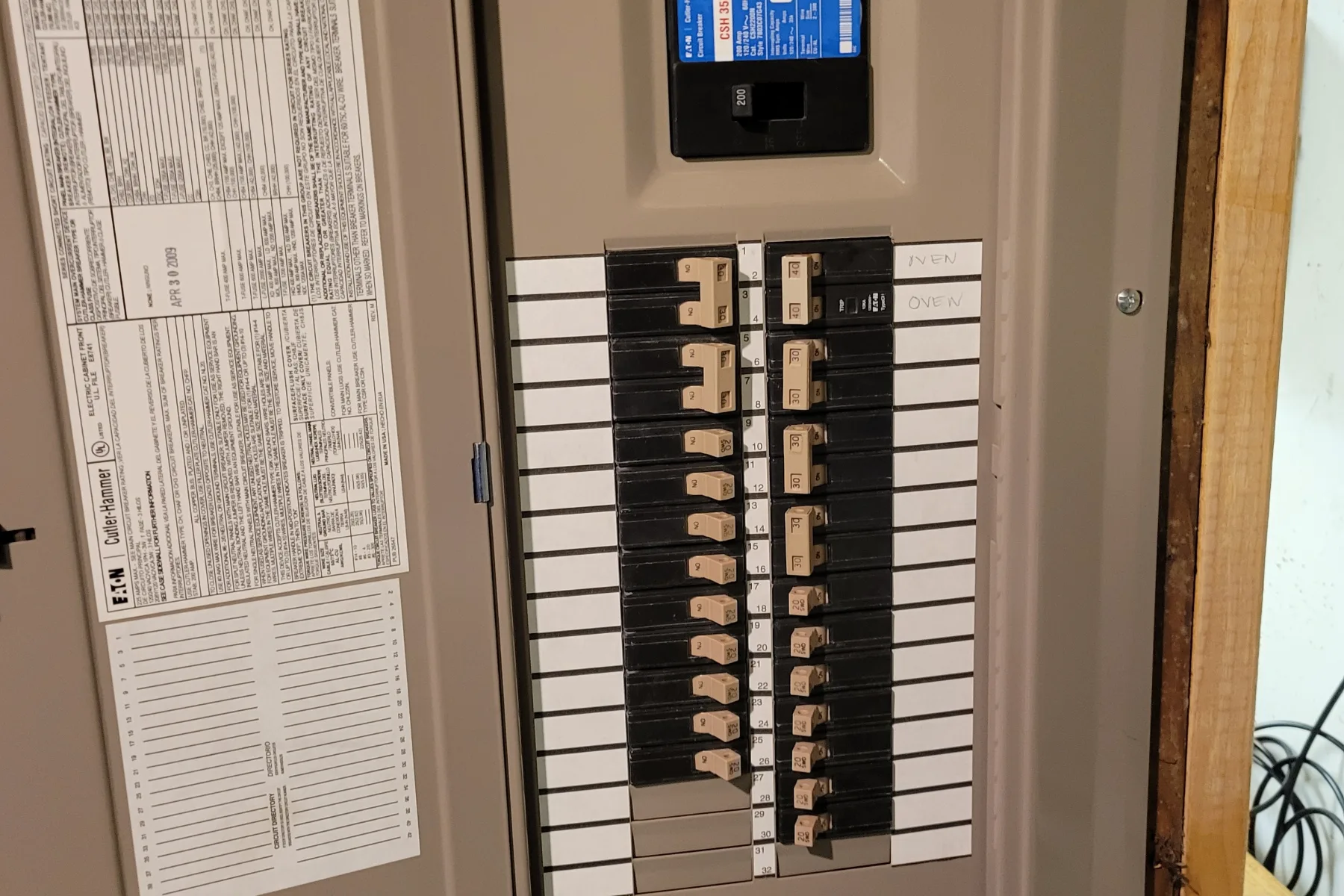
Photos From Actual Benchmark Panel and Wiring Projects



What Will the Electrician Check?
Define When It Trips
Does it trip instantly, after several minutes, only with one appliance, or when multiple loads run together?
Identify the Circuit and Loads
The electrician determines what the breaker supplies and looks for shared, unexpected, or recently changed loads.
Test Relevant Components
Testing may include the breaker, panel connection, protective functions, devices, accessible wiring, and connected equipment as appropriate.
Recommend the Correct Fix
The result may be a device or connection repair, dedicated circuit, breaker correction, equipment service, rewiring, or panel work.
Do I Need a New Breaker or a New Electrical Panel?
A tripping breaker does not by itself identify which part has failed. Breaker replacement may be appropriate when testing identifies a defective breaker and the panel and circuit remain suitable. An appliance or wiring fault needs correction at its source; adding a larger breaker is not a substitute. Damaged or obsolete panel equipment may justify a separate replacement scope. Benchmark explains the finding before recommending parts or a larger project.
For a circuit-breaker repair visit, tell us the affected rooms, appliance model if relevant, whether the trip is immediate or delayed, and any recent electrical changes. Photos of the closed panel and visible labels can help us prepare. Leave electrical covers in place.
Panel Replacement Options
See when a panel-only project or broader service work may be appropriate.
Seattle electrical panel replacementPanel vs. Service Upgrade
Understand the difference before assuming the utility service must be changed.
Compare panel replacement and service upgradesDoes Breaker Repair Require a Seattle Electrical Permit?
Diagnostic testing is not the same as installation work. Whether a repair requires an electrical permit depends on the work ultimately performed. Benchmark can identify the repair scope and follow Seattle Department of Construction and Inspections requirements when permitted work is needed. Review Seattle electrical permit information.
How Much Does Breaker Troubleshooting Cost?
Cost depends on whether the problem is repeatable, how many circuits or loads are involved, access to the wiring, panel condition, testing time, and the repair ultimately required. Review the Seattle electrician cost guide for planning information.
Sending clear panel, breaker, equipment-label, and affected-area photos can help prepare for the visit, but a photo alone usually cannot identify a hidden or intermittent fault.
Breaker-Tripping Questions Seattle Homeowners Ask
Who should I call when my breaker keeps tripping?
Call a licensed electrical contractor to test the circuit, connected loads, breaker, wiring, and panel conditions.
Can you replace only the breaker?
Sometimes, but the circuit should be evaluated first. A new breaker will not correct an overload, appliance fault, damaged wiring, loose connection, or unsuitable circuit.
Why does my breaker trip when I use the microwave or space heater?
The appliance may be overloading a shared circuit, exposing a weak connection, or developing an internal problem. Testing is needed to separate the possibilities.
Why does the breaker trip immediately after I reset it?
An immediate trip may indicate an active fault, failed connected equipment, damaged wiring, or another condition that should be evaluated with the circuit left off.
Is a buzzing breaker dangerous?
Buzzing accompanied by heat, odor, repeated tripping, visible damage, or unstable power deserves prompt attention. Avoid using the affected circuit until it is evaluated.
Can I send a photo for an estimate?
Yes. Send the panel, breaker, panel label, affected device or appliance, and visible damage. Photos help with planning, although on-site testing may still be required.
Find a Licensed Electrician for a Tripping Breaker in Seattle
Tell Benchmark which breaker trips, what was running, how quickly it happens, and whether you noticed heat, odor, buzzing, sparks, or partial power.