
Seattle Residential Electrical Troubleshooting
Why Do My Lights Flicker When an Appliance Turns On—Do I Need an Electrician in Seattle?
A brief, slight dip when a large motor starts can be load-related, but repeated, worsening, or multi-room flickering deserves electrical diagnosis—especially with buzzing, heat, odor, sparks, or partial power.
Benchmark Home Services helps Seattle homeowners determine whether flickering comes from a bulb or dimmer, appliance startup, shared circuit, loose connection, damaged wiring, breaker, panel, or service condition.
Short Answer: Repeated or Multi-Room Flickering Should Be Checked
If one LED bulb flickers, the cause may be the bulb, fixture, switch, or dimmer. If lights dim whenever a microwave, dryer, heat pump, vacuum, refrigerator, or other appliance starts, the circuit and load should be evaluated. Flickering across several rooms—or lights that alternate between unusually bright and dim—can indicate a broader wiring, neutral, panel, or service problem.
- ✓Flicker follows one appliance
- ✓Several rooms brighten or dim
- ✓Buzzing, heat, odor, or sparking
- ✓Older wiring or panel concerns
See What Seattle-Area Homeowners Are Saying
These real Benchmark reviews describe the methodical diagnosis this type of symptom requires.
“The issue turned out to be a detached neutral in the attic wiring.”
Shane H. · Older-home lighting-circuit diagnosis
“He explained everything that was going on with our electrical box and fixed the issue between our electrical and our dryer.”
Ryan R. · Dryer and electrical-box diagnosis
“He quickly diagnosed the problems in three rooms and resolved it.”
Len J. · Multi-room electrical diagnosis
What Flickering Pattern Are You Seeing?
The pattern matters more than the word “flicker.” Before the visit, note exactly what changes and what was running.
One Bulb or Fixture
A loose bulb, failing LED driver, incompatible dimmer, worn socket, or fixture connection may affect only one light.
One Room or Circuit
If several lights on the same circuit react together, the cause may involve a shared load, branch-circuit connection, switch, breaker, or wiring condition.
One Appliance Starts It
A microwave, vacuum, refrigerator, dryer, heat pump, or other equipment may create a noticeable voltage dip at startup or reveal a circuit or connection problem.
Several Rooms Are Affected
Widespread dimming, brightening, or flicker may point beyond a single fixture toward a neutral, panel, service, or utility-side condition.
Only During Wind or Rain
Weather-related symptoms can involve moisture, exterior equipment, tree contact, overhead service components, or a connection that moves under changing conditions.
Flicker Is Getting Worse
Increasing frequency, longer dimming, partial power, or new sounds and odors are reasons to stop treating the symptom as a minor nuisance.
Why Do Lights Flicker When an Appliance Turns On?
Normal Startup Demand
Motors and compressors can draw more current as they start. A very brief, slight dip may be load-related, but it should not cause dramatic or persistent changes.
Shared or Heavily Loaded Circuit
Lighting and a high-demand appliance may share a circuit that is poorly suited to the way the home is now used.
Loose or Heat-Damaged Connection
A loose splice, terminal, device connection, breaker connection, or neutral can produce intermittent voltage changes and may worsen with load.
Appliance or Equipment Problem
A failing motor, compressor, heating element, power supply, or internal connection can create abnormal demand or erratic operation.
LED and Dimmer Compatibility
One fixture may flicker because the lamp, driver, or dimmer combination is incompatible—even when the rest of the electrical system is stable.
Panel, Neutral, or Service Condition
Flickering across rooms can involve breaker connections, bus condition, neutral integrity, service conductors, meter equipment, or utility supply.
When Are Flickering Lights an Electrical Emergency?
Turn off affected equipment when it is safe to do so and seek urgent help if flickering comes with burning odor, smoke, sparking, crackling, buzzing at the panel, hot devices, visible discoloration, repeated breaker trips, shocks, or partial power. Lights that become unusually bright in one area while dimming in another can indicate a neutral problem and should be treated seriously. For active fire, smoke, or immediate danger, leave the area and call 911. Otherwise, review Benchmark’s Seattle emergency electrical guidance.
The Electrical Safety Foundation International identifies dim or flickering lights, buzzing, overheating, sparks, frequent trips, and damaged wiring as signs that warrant a licensed electrical inspection.
What Can I Safely Check Before Calling?
Do not open the panel, remove device covers, or touch wiring. Instead, document the pattern:
Name the Trigger
Write down which appliance starts immediately before the lights change and whether it happens every time or only occasionally.
Map the Affected Rooms
Note whether one fixture, one room, one floor, or several distant rooms are affected.
Check Lamp Behavior
If only one lamp flickers, try a known compatible bulb without opening the fixture or dimmer. Stop if the fixture is hot, damaged, buzzing, or discolored.
Record Timing and Duration
Note whether the change lasts a fraction of a second, continues while the appliance runs, or appears randomly.
Photograph Labels
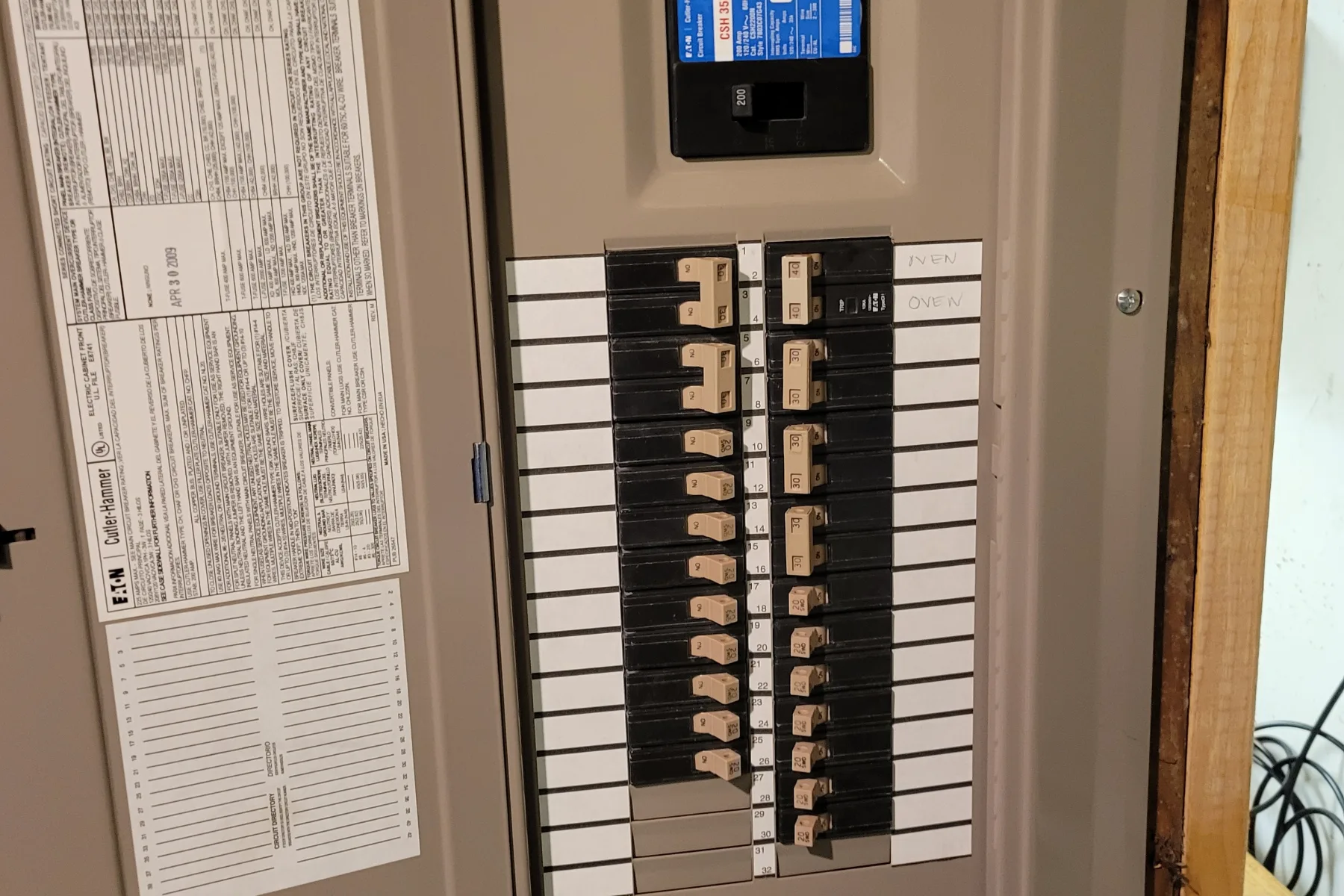
Photos of the appliance nameplate, electrical panel, main breaker, and breaker directory help prepare for load and circuit evaluation.
Watch for Other Symptoms
Report breaker trips, dead outlets, warmth, odor, sound, shocks, or partial power alongside the flicker.
Photos From Actual Benchmark Panel and Wiring Projects
These real Benchmark project photos show conditions that can matter when appliance loads make lighting symptoms visible.
Panel Capacity Evaluation
Appliance loads, breaker space, panel condition, and service capacity should be evaluated together.

Panel Condition Matters
Contamination, corrosion, heat, or poor connections can complicate circuit and voltage symptoms.

Dedicated Branch Wiring
A properly planned new circuit can separate high-demand equipment from existing lighting loads.

Older Branch Wiring
Mixed-era and deteriorated wiring can turn a simple flicker into a broader diagnostic question.
What Will the Electrician Test?
Fixture, Lamp, and Control
We separate a single-fixture LED or dimmer issue from a circuit-wide voltage symptom.
Appliance Startup Behavior
We evaluate the timing, connected circuit, equipment demand, and whether the symptom follows one stage of operation.
Branch Circuit and Connections
Testing can identify voltage drop, loose connections, shared loads, damaged devices, or wiring faults.
Panel and Service Conditions
When multiple circuits are affected, we assess relevant breaker, panel, neutral, grounding, service, and capacity conditions.
For broad fault finding, visit Seattle electrical troubleshooting. If the breaker also opens, use our guide for a breaker that keeps tripping. If outlets lose power while the breaker stays on, use the Seattle dead-outlet guide. If several rooms lose power or lights become unusually bright and dim, see what partial power can mean in a Seattle home.
Do I Need a Dedicated Circuit or a Panel Upgrade?
Fixture or Control Repair
If one light is affected, the solution may be a compatible lamp, dimmer, fixture, or local connection repair.
Dedicated Appliance Circuit
If a high-demand appliance shares wiring or lacks the correct circuit, a dedicated circuit may be the appropriate repair path.
Seattle appliance circuitsPanel or Service Planning
A panel or service change should follow diagnosis and load evaluation—not be assumed from the symptom alone.
Seattle panel readiness checklistPanel replacement vs. service upgrade
How Much Does Flickering-Light Troubleshooting Cost?
Benchmark’s Seattle troubleshooting visits often begin with a $275 first-hour visit. Final cost depends on whether the symptom is repeatable, how many circuits or rooms are involved, appliance access, panel and wiring conditions, testing time, materials, and the repair ultimately required. Review the Seattle electrician cost guide.
A bulb or dimmer replacement is a different scope from tracing a loose neutral, evaluating an appliance circuit, or diagnosing a multi-room voltage problem. The purpose of troubleshooting is to price the correct repair after the cause is understood.
Do Flickering-Light Repairs Require a Seattle Permit?
Diagnostic testing is not the same as installation work. Whether the final repair needs a permit depends on the work performed. Benchmark can identify the repair scope and follow Seattle Department of Construction and Inspections requirements when permitted work is needed. Review Seattle electrical permit information.
Flickering-Light Questions Seattle Homeowners Ask
Is it normal for lights to dim when an appliance starts?
A slight, momentary dip can occur when some motors or compressors start. Repeated, severe, prolonged, worsening, or multi-room changes should be evaluated.
Why do my lights flicker when the microwave runs?
The microwave may share a heavily loaded circuit, reveal a loose connection, have an equipment problem, or need a properly planned dedicated circuit.
Why do lights flicker in several rooms at once?
Multi-room symptoms can involve a shared connection, neutral, panel, service equipment, or utility supply and deserve prompt diagnosis.
Can an LED bulb or dimmer cause flickering?
Yes. An incompatible lamp, driver, dimmer, or control can affect one fixture, but it does not explain every circuit-wide or multi-room symptom.
Do flickering lights mean I need a new electrical panel?
Not automatically. Diagnosis may point to a bulb, dimmer, fixture, appliance, branch circuit, connection, breaker, panel, service, or utility condition.
Who should I call for flickering lights in Seattle?
Call a licensed electrical contractor when flickering repeats, affects multiple lights or rooms, follows appliance use, or comes with other warning signs.
Find a Licensed Electrician for Flickering Lights in Seattle
Benchmark Home Services provides residential lighting, circuit, panel, and service troubleshooting throughout Seattle. Tell us which appliance triggers the symptom, which rooms are affected, how long it lasts, and whether you notice trips, heat, odor, sound, sparks, shocks, or partial power.