
Seattle Home Inspection Electrical Help
Electrical Inspection Report Corrections in Seattle
A home inspection can identify an electrical concern without defining the complete repair scope. Benchmark Home Services helps Seattle buyers, sellers, agents, and homeowners verify the condition, understand the urgency, and choose the correct electrical response.
Call (206) 717-5076 for your FREE estimate.
Have a report or repair addendum? Send the electrical pages, panel photos, close-up photos of the flagged condition, and your deadline. We will help route the issue toward targeted repair, troubleshooting, panel work, partial rewiring, service-capacity planning, or an on-site evaluation.
What Benchmark can help clarify
We turn short inspection notes into a practical electrical correction path based on the visible condition, photos, access, urgency, and project goals.
- ✓Which findings may be targeted repairs
- ✓When troubleshooting or a site visit is needed
- ✓Whether panel, service, or rewiring work may overlap
- ✓What photos and report pages to send first
Direct answer: what should you do after an electrical inspection report flags a problem?
Start by separating the inspection language from the actual electrical scope. A report may flag ungrounded outlets, GFCI issues, double-tapped breakers, open junction boxes, missing covers, obsolete wiring, knob-and-tube wiring, panel concerns, or service-capacity questions. Those notes are useful, but they still need field verification before anyone can responsibly price the correction.
Benchmark Home Services reviews the report, photos, panel condition, visible wiring, access, safety concerns, sale deadline, and planned upgrades. Then we help route the issue toward the right next step: targeted repair, electrical troubleshooting, outlet correction, panel replacement, partial rewiring, knob-and-tube evaluation, service upgrade planning, or documentation for the next stakeholder.
This page is built for Seattle-area homeowners who need more than a generic “call an electrician” recommendation. It helps you understand which electrical correction path fits the inspection finding.
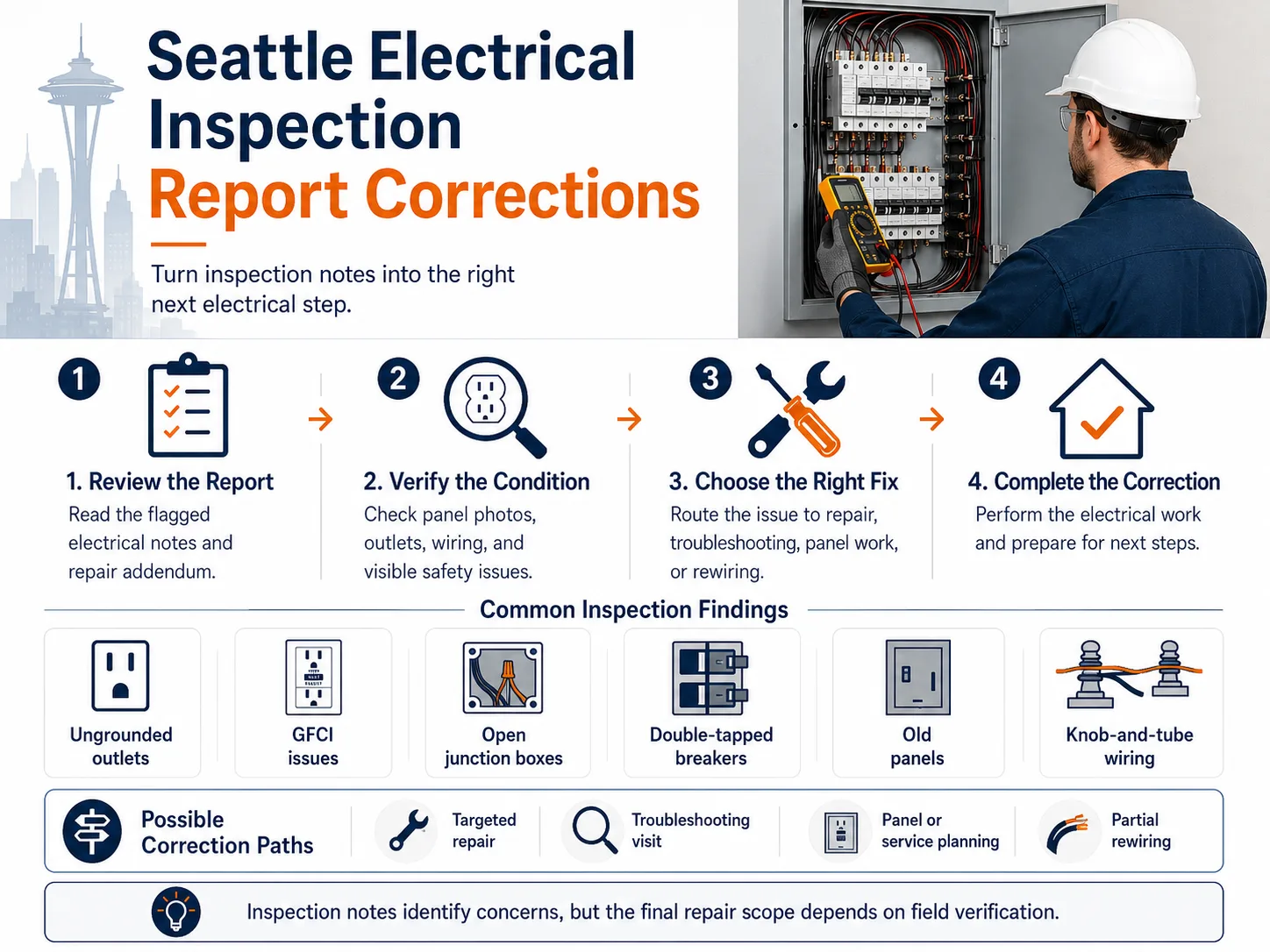
Electrical inspection report correction help for Seattle homes
Inspection reports often use short, cautious language because the inspector is identifying concerns, not performing a full electrical diagnosis. That is why the same note can mean different things in different homes.
For example, “ungrounded outlets” may lead to GFCI protection, labeling, grounded circuit installation, outlet replacement, rewiring, or further troubleshooting. “Older wiring noted” may lead to documentation only, partial replacement, or a larger Seattle house rewiring plan. “Panel concern” may lead to a small correction, electrical panel replacement in Seattle, or electrical service upgrade planning.
Benchmark helps turn those notes into a practical correction plan so homeowners, buyers, sellers, and agents can make decisions without guessing.
- Buyer inspection objections where electrical items need pricing or explanation before closing
- Seller repair requests where the scope should be clear before agreeing to corrections
- Older-home wiring notes involving knob-and-tube, ungrounded outlets, open splices, or mixed-era wiring
- Panel and capacity concerns involving crowded panels, obsolete equipment, breaker space, or future loads
- Safety correction items such as missing covers, exposed wiring, warm devices, GFCI issues, or questionable splices
What to send for review
The fastest way to get useful guidance is to send the exact report language plus photos that show the real condition.
- Home inspection electrical section or repair addendum
- Photos of the main electrical panel and breaker labels
- Photos of outlets, switches, fixtures, GFCI devices, or problem areas
- Attic, basement, crawlspace, or garage photos when old wiring is mentioned
- Real estate deadline, insurance deadline, remodel deadline, or planned project
- Any known symptoms, such as breaker trips, flickering lights, dead outlets, buzzing, or warm devices
Common electrical inspection report corrections we review
Report note
Ungrounded outlets or two-prong receptacles
Older Seattle homes commonly have ungrounded outlets. The correction may involve GFCI protection, labeling, grounded circuit installation, outlet replacement, rewiring, or a larger older-home plan depending on the wiring path and use.
Report note
Knob-and-tube or obsolete wiring
A K&T note should be decoded before pricing a full replacement. Start with our knob-and-tube inspection report decoder if the report mentions active wiring, abandoned wiring, ungrounded outlets, open splices, insulation concerns, or panel overlap.
Report note
Open junction boxes or exposed splices
Exposed splices and missing junction-box covers can be more urgent than broad age-related wording because they may involve accessible unsafe connections. The correction depends on location, wire condition, box fill, access, and whether older wiring is involved.
Report note
GFCI, AFCI, or receptacle safety issues
Kitchens, bathrooms, laundry areas, garages, exteriors, basements, and other locations may need safety-device review. The fix may be device replacement, circuit correction, troubleshooting, or wiring updates.
Report note
Double-tapped breakers or panel defects
Panel notes can range from small corrections to larger replacement planning. Benchmark reviews breaker compatibility, panel condition, labeling, available space, grounding, bonding, and whether future loads change the plan.
Report note
Federal Pacific, Zinsco, fuse box, or old panel
Insurance and inspection reports often flag older panel equipment. The next step may be panel evaluation, replacement pricing, service-capacity review, or a broader older-home electrical upgrade plan.
Report note
Improper wiring, loose devices, or missing covers
Some correction items are targeted repairs. Others reveal previous DIY work, damaged boxes, overloaded circuits, or hidden conditions that need further diagnosis.
Report note
Panel capacity or service size concerns
EV chargers, heat pumps, hot tubs, induction ranges, remodel circuits, and ADU work can expose service limitations. The correction may involve load planning, dedicated circuits, panel work, or service upgrade planning.
Report note
Inspection correction after permitted work
If a permit inspection produces correction notes, the correction should be matched to the permit scope, inspection result, and visible field condition before rescheduling inspection.
Buyer, seller, agent, insurance, and remodel situations
Electrical inspection report corrections often become urgent because another party is waiting for an answer. A buyer may want a repair credit. A seller may need pricing before responding. A real estate agent may need a clearer scope. An insurer may ask about panel or old wiring conditions. A remodel may uncover wiring that needs correction before work continues.
Benchmark can help sort the electrical scope, but we do not promise what a buyer, seller, insurer, lender, inspector, or city authority will accept. We can evaluate electrical conditions, perform agreed electrical work, and provide practical documentation for completed work.
Buying a Seattle home
If your inspection report flags electrical concerns before closing, Benchmark can help you understand what the note may mean and which items deserve electrical review before you make repair or credit decisions.
Selling a Seattle home
If a buyer asks for electrical corrections, Benchmark can help clarify whether the issue looks like a targeted repair, troubleshooting item, panel concern, or larger older-home project.
Planning after closing
Many homeowners inherit inspection notes after purchase. We help prioritize what should be corrected first, what should be planned with future upgrades, and what needs closer evaluation.
How Benchmark turns inspection notes into an electrical scope
Report and trigger review
We identify why the correction matters now: purchase, sale, insurance, remodel, insulation, permit correction, safety symptom, or planned upgrade.
Photo and visible-condition review
We review panel photos, device photos, wiring photos, labels, access areas, report language, and any known symptoms before recommending the next step.
Safety and urgency routing
Burning smells, sparking, buzzing panels, hot devices, partial power, repeated breaker trips, and exposed energized wiring are handled differently than non-urgent planning notes.
Correction category
We separate targeted repair, electrical troubleshooting, outlet/GFCI correction, panel correction, rewiring, K&T evaluation, service upgrade planning, and permit-related correction work.
Estimate or site visit
Some items can be discussed from photos. Hidden wiring, old panels, active K&T, service-capacity questions, or access-sensitive repairs usually need a site visit before final pricing.
Work and documentation
After the agreed work is complete, Benchmark can document completed electrical work and explain what was corrected, while avoiding guarantees about third-party insurance or real estate outcomes.
Which correction path fits the report?
Path 1
Targeted correction
Best when the issue is specific and accessible, such as missing covers, loose devices, open junction boxes, fixture defects, GFCI replacement, labeling, or localized wiring corrections.
Path 2
Troubleshooting visit
Best when the report overlaps with symptoms such as dead outlets, repeated trips, flickering lights, warm devices, partial power, or unclear circuit behavior.
Path 3
Panel or service planning
Best when the panel is crowded, obsolete, damaged, under-capacity, insurance-flagged, or tied to planned loads such as EV charging, heat pumps, hot tubs, or remodel circuits.
Path 4
Partial rewiring
Best when old or unsafe wiring serves a defined room group, attic run, basement section, remodel area, or set of inspection-flagged devices.
Path 5
Whole-home modernization
Best when old wiring is widespread, grounding is missing across much of the home, panel work is needed, access is complex, or future loads require a larger plan.
Path 6
Documentation and next-step planning
Best when the immediate need is understanding the report, documenting visible conditions, planning priorities, or deciding what to address before a larger project.
Permits, inspections, and correction notes in Seattle
Some electrical inspection report corrections are simple residential repair items. Others may require permit and inspection planning, especially when the correction involves new circuits, panel work, service equipment, service capacity, or larger rewiring scope.
Seattle SDCI publishes electrical permit and inspection information for Seattle projects. SDCI notes that many electrical permits involve cover, service, and final inspections depending on scope, and electrical inspections can be scheduled through the Seattle Services Portal or by phone with a permit number available.
Older wiring and insulation concerns can also involve Washington requirements. WAC 296-46B-394 establishes specific conditions for adding loose or rolled insulation in spaces containing existing knob-and-tube wiring, including contractor evaluation, written certification, inspection of electrical alterations or repairs, and proper overcurrent protection. The rule does not allow foam insulation to be used with knob-and-tube wiring.
Common mistakes after an electrical inspection report
Pricing from one sentence
A single inspection sentence rarely explains access, wiring path, panel condition, permit scope, or whether the defect is isolated or widespread.
Assuming every old-wiring note means full rewiring
Some old wiring concerns need full replacement planning. Others need targeted correction, partial rewiring, documentation, or a panel review first.
Ignoring future loads
If the home will add an EV charger, heat pump, induction range, hot tub, generator, or remodel circuits, the correction should be planned with panel and service capacity in mind.
Confusing a buyer request with a code ruling
A buyer, seller, inspector, insurer, and permitting authority may all look at the same condition differently. Electrical work should be scoped around the actual condition and agreed goal.
Forgetting access and finish repair
Rewiring and some corrections require access holes. Drywall, plaster, paint, tile, and finish repair should be discussed before comparing prices.
Waiting on active safety symptoms
If the report is paired with burning smells, sparking, buzzing, hot devices, or partial power, treat it as a higher-priority electrical issue.
Related electrical services for inspection corrections
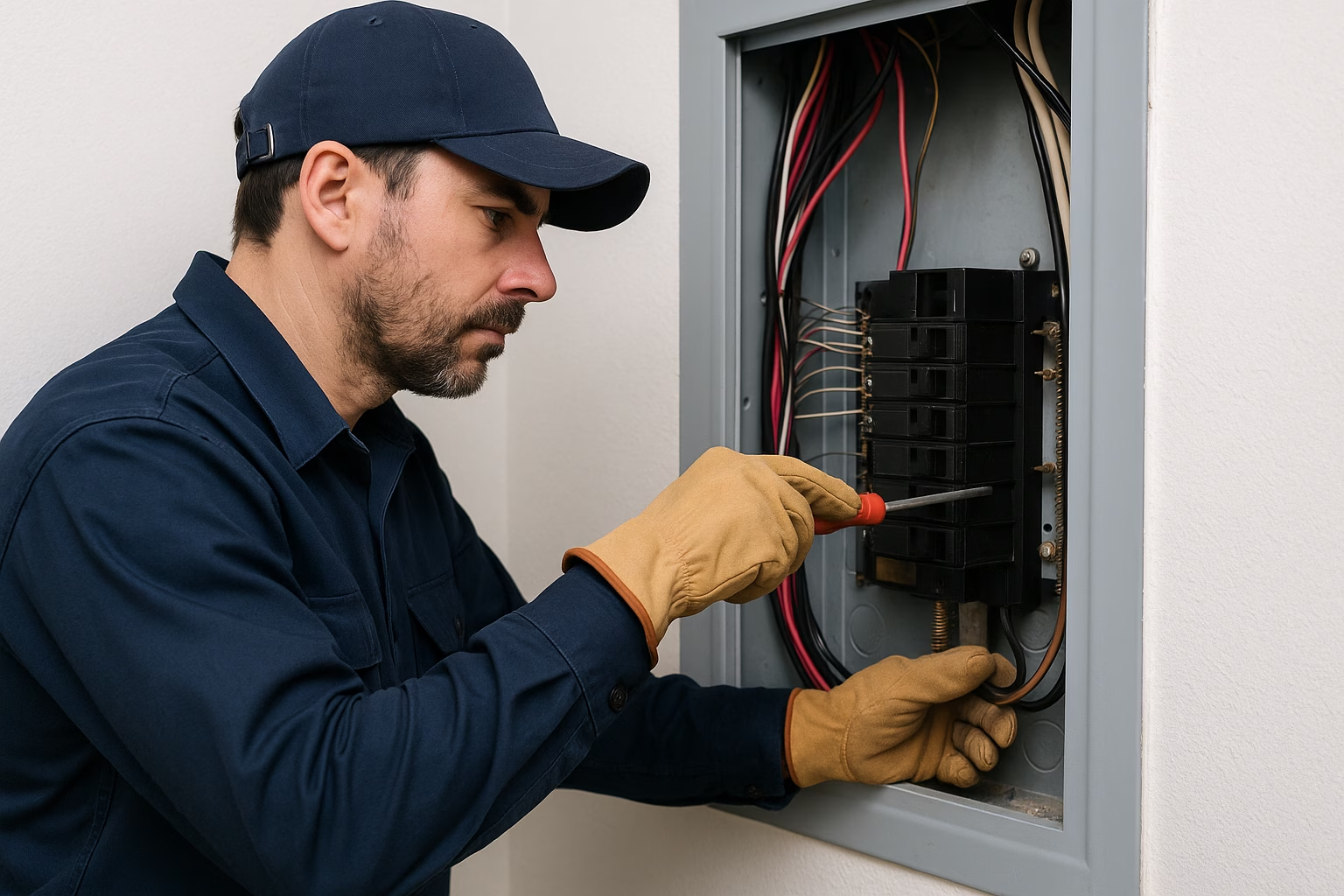
Diagnostic help for dead outlets, breaker trips, flickering lights, warm devices, partial power, GFCI issues, and unclear inspection symptoms.
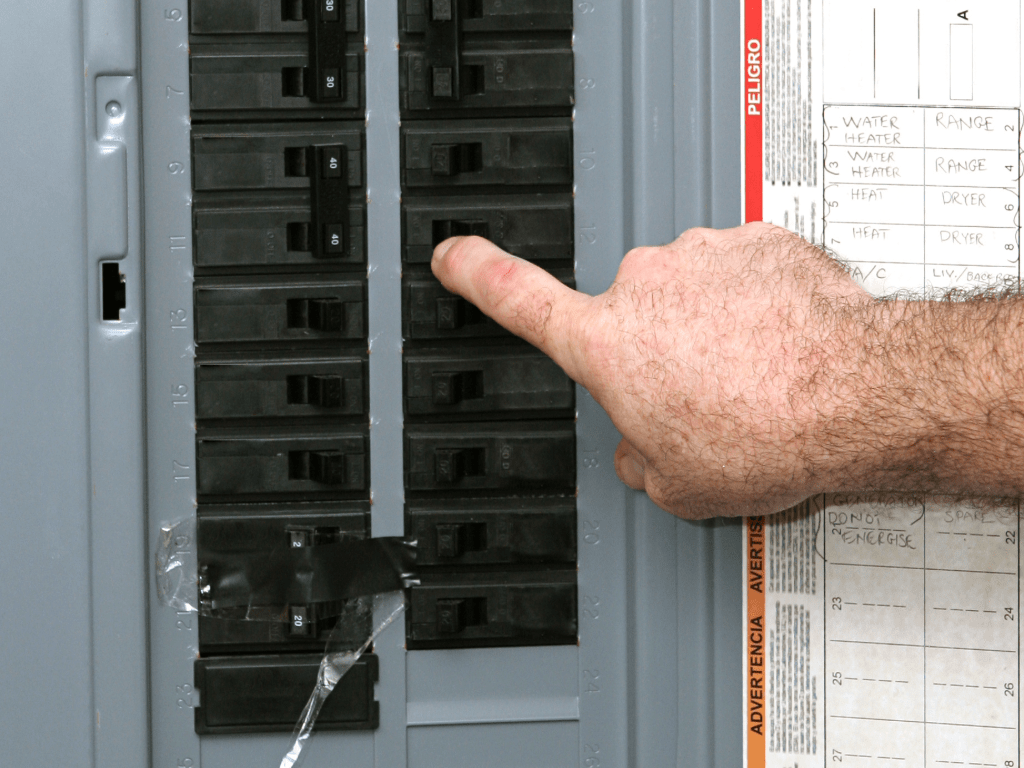
Panel replacement and planning when reports mention obsolete panels, crowded panels, double taps, breaker issues, service concerns, or future load limits.

Partial and whole-home rewiring for old wiring, ungrounded circuits, inspection report concerns, remodels, and older-home modernization.
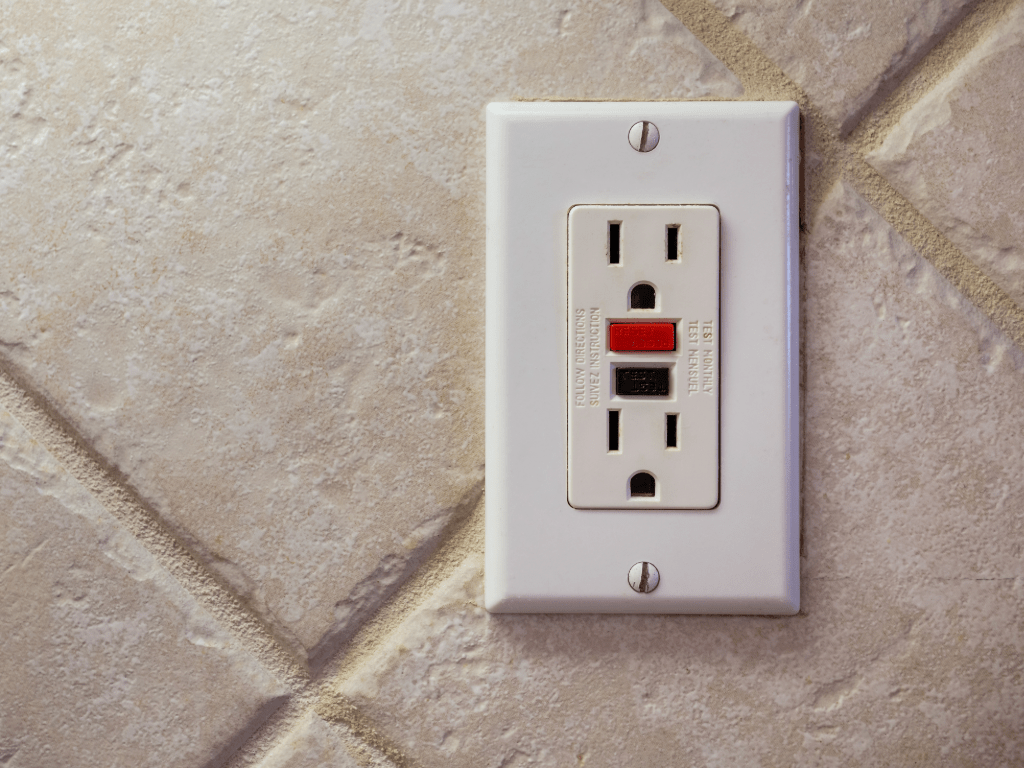
Replacement planning for active legacy wiring, report notes, insurance questions, remodel discoveries, and older-home electrical upgrades.
More planning pages for Seattle inspection corrections
If your inspection report mentions older wiring, panel capacity, ungrounded outlets, or future-load limitations, these Benchmark pages can help you choose the right next step:
- Knob & Tube Inspection Report Decoder
- Older Seattle Home Electrical Upgrade Guide
- Seattle Electrician Cost Guide
- Electrical Panel Replacement Cost in Seattle
- Electrical Service Upgrades in Seattle
- Electrical Outlet Installation in Seattle
- Seattle Residential Electrician Services
- Request an Electrical Inspection Correction Estimate
Electrical inspection report correction questions
Can Benchmark fix electrical items from a home inspection report?
Yes. Benchmark can review the report, inspect the affected areas, and help correct electrical items such as outlet issues, GFCI concerns, open junction boxes, panel defects, old wiring concerns, and related safety items.
Can you give a price from the inspection report alone?
Sometimes a rough direction is possible, but many electrical findings need photos or a site visit. Access, panel condition, wiring type, permit scope, and hidden conditions can change the final price.
Do inspection corrections always require a permit?
Not every small correction requires the same permit path. New circuits, panel work, service work, and larger rewiring scopes are more likely to involve permit and inspection planning. Scope should be reviewed before assumptions are made.
What should I send after my inspection flags electrical issues?
Send the electrical section of the report, panel photos, breaker label photos, outlet or switch photos, visible wiring photos, and any deadline tied to a sale, purchase, insurance request, remodel, or permit correction.
Does an inspection report mean the house needs rewiring?
Not automatically. Some homes need targeted correction or partial rewiring. Others need a broader rewiring plan. The right scope depends on the active wiring, condition, access, grounding, panel status, and planned use.
Can Benchmark help with buyer or seller repair requests?
Benchmark can help homeowners understand electrical concerns and price practical correction options, but real estate negotiations and acceptance of repairs are decisions between the parties involved.
Can Benchmark guarantee insurance approval after corrections?
No. Benchmark can evaluate electrical conditions and document completed work, but underwriting decisions belong to the insurance company.
What if the report mentions knob-and-tube wiring?
Use the knob-and-tube inspection report decoder first, then send the report and photos. The next step depends on whether the wiring is active, abandoned, damaged, modified, buried in insulation, or tied to panel and grounding concerns.
Need help with electrical inspection report corrections in Seattle?
Send Benchmark Home Services the inspection report, panel photos, outlet photos, visible wiring photos, and any deadline. We will help you understand the electrical issue and choose the next practical correction path.