
Seattle Knob and Tube Rewiring Service
Knob and Tube Replacement in Seattle, WA
Replace active knob-and-tube wiring with safer, modern electrical wiring for older Seattle homes, inspections, remodels, insurance concerns, and long-term safety.
Benchmark Home Services helps Seattle homeowners replace outdated knob-and-tube wiring with safer, code-focused modern wiring. If an inspection, remodel, insurance review, home sale, or electrical issue has brought old wiring to your attention, our Seattle residential electrician team can help you understand what is active, what should be replaced, and how the project should be planned.
Call (206) 717-5076 for your FREE knob-and-tube replacement estimate.
Not sure if your older Seattle home still has active knob-and-tube wiring? Warning signs include two-prong outlets, visible ceramic knobs or tubes in attic or basement spaces, inspection concerns, older ungrounded circuits, or insurance questions about outdated wiring. Have an inspection report, panel photo, attic photo, or insurance request? Send it with your estimate request so the visit starts with the right context.
Older-home rewiring without the guesswork
Knob-and-tube projects are about more than old wire. We help Seattle homeowners understand access, plaster concerns, active circuits, panel needs, permits, inspections, and the cleanest path to safer modern wiring.
- ✓ Active knob-and-tube replacement and decommissioning
- ✓ Attic, basement, crawlspace, and wall-cavity access planning
- ✓ Plaster, drywall, and access-hole expectations explained upfront
- ✓ Licensed · WA #BENCHHS818NT
Trusted Seattle Older-Home Wiring Service
Knob-and-tube replacement requires more than swapping out old wire. Seattle homes often have mixed-era electrical systems, plaster walls, finished basements, limited access, outdated panels, and previous remodel wiring. Benchmark Home Services plans the work carefully so the home moves toward a safer, more reliable electrical system.

See What Seattle Homeowners Are Saying
Homeowners call Benchmark for older-home electrical work, knob-and-tube replacement, rewiring, panel upgrades, troubleshooting, and safer residential electrical service.
Need knob and tube replacement in Seattle? Benchmark Home Services helps Seattle homeowners replace active knob-and-tube wiring with safer, more practical modern wiring systems. If your home still has legacy wiring, or if an inspection, remodel, insurance review, or electrical problem has brought it to your attention, we can help you understand what needs to be replaced and what the safest next step looks like.
Many older Seattle homes still contain some amount of knob-and-tube wiring. Sometimes it is still active. Other times, past modifications make the system harder to evaluate and less ideal for modern electrical use.
- Active knob-and-tube wiring replacement for older homes that still rely on legacy wiring
- Selective replacement where old wiring is still serving targeted areas of the home
- Whole-home rewiring planning when knob-and-tube wiring is part of a larger outdated electrical system
- Panel and service upgrade coordination when the home needs more capacity or cleaner circuit organization
Active vs. Abandoned Knob-and-Tube Wiring
One of the biggest questions in an older Seattle home is whether the knob-and-tube wiring is still active or simply left behind from a previous electrical update. Old wiring can remain visible in an attic, basement, crawlspace, or wall cavity even after some circuits have been replaced. That does not automatically prove whether it is energized.
Benchmark looks at accessible wiring, outlet behavior, panel conditions, visible junction points, known problem areas, and the reason the issue came up. The goal is to separate old wiring that only remains in place from legacy wiring that is still serving outlets, lights, switches, or other loads.
This distinction matters because active knob-and-tube wiring usually drives the replacement scope, while abandoned wiring may be documented, left in place where allowed, or removed when it is practical during other work.
Why this matters
- Active old wiring may affect safety, insurance, remodel plans, and inspection findings.
- Abandoned wiring may still look concerning to buyers or inspectors if it is not clearly explained.
- Mixed-era wiring can make a home harder to evaluate without a licensed electrician.
- Replacement planning should be based on what is actually serving the home, not guesswork.
The Benchmark K&T Replacement Standard
Knob-and-tube replacement should not be a vague promise to “rewire the house.” Benchmark uses a documented older-home process so Seattle homeowners can understand what was found, what is still active, what scope makes sense, and what should be documented after the work is complete.
1. Discovery review
We identify why the issue came up: inspection, insurance, remodel discovery, home sale, outage, two-prong outlets, visible attic or crawlspace wiring, or panel concerns.
2. Visible wiring survey
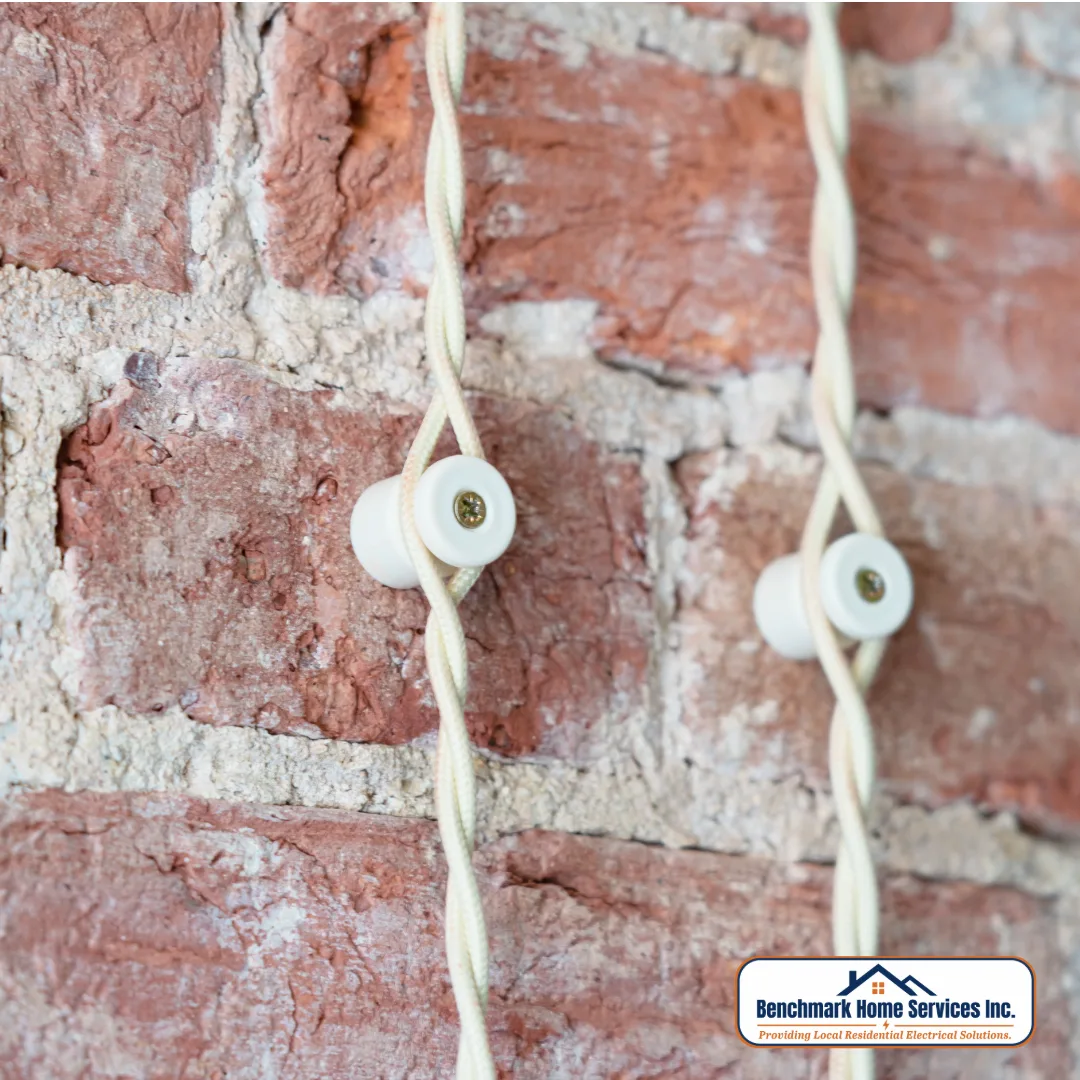
We review accessible attic, basement, crawlspace, panel, junction points, ceramic knobs and tubes, cloth wiring, splices, and mixed-era wiring where visible.
3. Active vs. abandoned mapping
We separate old wiring that merely exists from old wiring that appears to be serving lights, outlets, switches, or other loads.
4. Risk classification
We look for damaged insulation, unsafe splices, overcurrent concerns, buried wiring, fixture heat issues, no grounding, overloaded circuits, and unsafe modifications.
5. Panel and service review
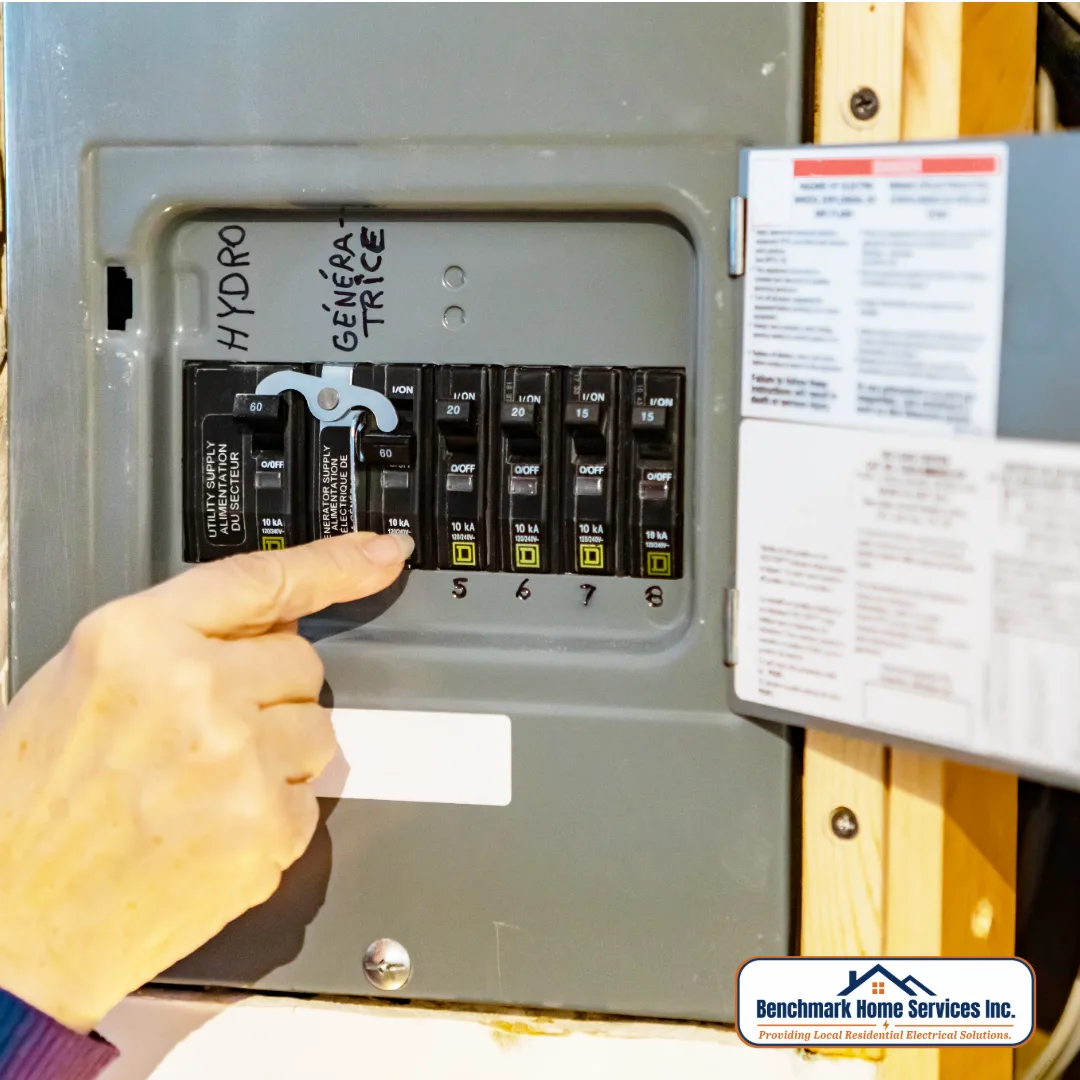
We check whether the existing panel, breaker space, grounding and bonding, service capacity, and circuit layout can support the replacement plan.
6. Scope options
We explain targeted replacement, larger partial replacement, whole-home rewiring, or broader modernization when the electrical system needs more than one repair.
7. Access and plaster plan
We explain attic, crawlspace, basement, closet, ceiling, and wall access expectations, including likely openings and finish repair exclusions.
8. Permit and inspection plan
We plan around electrical permits and inspections when they are required, including cover, service, feeder, and final inspection expectations when applicable.
9. Replacement and decommissioning
We replace active legacy wiring with modern wiring where required and safely decommission old active sections as part of the approved scope.
10. Completion documentation
We provide a project summary, permit or inspection notes when applicable, useful before-and-after photos, panel or circuit labeling, and next-step recommendations.
Have an inspection report, insurance request, or panel photos?
Send the report or photos with your estimate request. We can use that information to understand the trigger, plan the visit, and help you compare targeted replacement against broader rewiring options.
How Much Does Knob and Tube Replacement Cost in Seattle?
Knob-and-tube replacement in Seattle commonly ranges from about $4,500 to $45,000+, depending on how much active wiring remains, home size, access, wall conditions, panel condition, and whether the project becomes a broader house rewiring project. For a deeper breakdown of project ranges, access issues, estimate comparison points, and common cost drivers, review our Seattle knob-and-tube replacement cost guide.
Targeted Replacement
$4,500–$12,000+Best for smaller areas where active knob-and-tube wiring still serves one part of the home or a targeted problem area.
Larger Partial Replacement
$9,500–$18,000+This range often applies when multiple rooms, circuits, or older-home areas still rely on legacy wiring.
Whole-Home K&T Rewire
$17,000–$35,000+A full rewire usually makes sense when knob-and-tube wiring remains active in many parts of the property.
Complex Rewire + Upgrades
$25,000–$45,000+Costs can rise when the project also includes plaster access, panel replacement, service upgrades, or extensive modernization.
| Seattle Cost Factor | Common Price Impact | What Affects the Cost |
|---|---|---|
| Amount of active knob-and-tube wiring | Major cost driver | The more areas still powered by active legacy wiring, the more new wiring, labor, and access planning are usually required. |
| Home size and layout | Higher for larger homes | Multi-story homes, older bungalows, craftsman homes, additions, and finished basements often require more labor. |
| Access conditions | Can significantly increase labor | Plaster walls, limited attic access, tight crawlspaces, finished ceilings, and built-in features can make replacement more involved. |
| Panel condition | May require panel replacement | If the existing panel is outdated, undersized, crowded, or not suitable for the new wiring layout, panel work may be recommended. |
| Service capacity | May require service upgrade | Some homes need a larger service when the rewiring project is part of a bigger modernization plan. |
| Wall repair and finish work | Often separate from electrical work | Electrical replacement usually does not include full drywall, plaster, paint, or finish restoration unless specifically included. |
Important: These are planning ranges, not guaranteed pricing. The final cost depends on how much knob-and-tube wiring is active, how accessible the wiring is, whether the home also needs broader rewiring, and whether panel or service upgrades are part of the project.
Because knob-and-tube replacement depends on access, grounding, fixture boxes, panel condition, and permit scope, it helps to review the cost of electrical work in Seattle homes before comparing bids.
When comparing estimates: ask whether the proposal includes active-vs-abandoned wiring evaluation, permit assumptions, panel compatibility, likely access holes, finish repair exclusions, documentation, and whether old wiring will be replaced, disconnected, or left in place because it is already abandoned. The dedicated K&T replacement cost factors page explains which bid details should be compared before choosing a contractor.
Need a Knob-and-Tube Rewiring Estimate?
We can review your older Seattle home, explain what appears to be active, and help you understand whether the project is targeted replacement, larger partial rewiring, or whole-home modernization.
Why Seattle Homeowners Replace Knob and Tube Wiring
Seattle has many older homes, which means knob-and-tube wiring still comes up more often here than it does in newer housing markets. Homeowners usually start looking into replacement because something has made the wiring impossible to ignore.
- A home inspection flagged active knob-and-tube wiring
- A remodel opened walls, ceilings, attic spaces, or basement areas
- An insurance carrier raised concerns or requested documentation
- A buyer, seller, or real estate agent wants the wiring evaluated
- The home has ungrounded outlets, limited circuits, or outdated electrical capacity
- The homeowner wants a safer, more future-ready electrical system
Even when old wiring still appears to work, that does not mean it is the best long-term fit for the home. As a result, replacement can improve safety, make future work easier, and help bring the electrical system closer to modern expectations.
Is It Worth Replacing Knob and Tube?
For many older Seattle homes, yes. In many cases, replacement can reduce safety concerns, help with insurance and resale questions, support grounded outlets, and make the electrical system more practical for modern use.
It can also uncover whether the home needs related improvements, such as circuit updates, panel replacement, or broader house rewiring.
Not All Old Cloth Wiring Is Knob-and-Tube
Some older Seattle homes have a mix of wiring generations. A homeowner may see cloth-covered wiring and assume it is knob-and-tube, but the home may also have early nonmetallic cable, often called old cloth NM cable or “snake-skin” wiring.
Knob-and-tube uses separated conductors supported by ceramic knobs and tubes. Early NM cable is different: the conductors are bundled inside a cable assembly, but the outer covering can still look old, cloth-like, brittle, or unfamiliar compared with modern NM cable.
Why the Distinction Matters
The correct repair plan depends on what type of wiring is present, whether it is active, what condition it is in, whether it includes an equipment grounding conductor, and how it connects to the panel and devices. Treating every old cloth-covered cable as knob-and-tube can lead to the wrong scope. Ignoring deteriorated or ungrounded old cable can create its own problems.
Benchmark evaluates the wiring type before recommending targeted replacement, broader rewiring, outlet grounding corrections, panel work, or future modernization. This is also why an older-home wiring evaluation is useful before remodels, insulation work, EV charger planning, or a home sale.
Seattle Knob and Tube Rewiring Services
We provide replacement and rewiring solutions for Seattle homeowners who need safer wiring, better electrical capacity, and a clearer path forward for older-home electrical systems.
Knob & Tube Replacement
Replacement of active legacy wiring with modern wiring methods for safer, more practical residential electrical use.
Inspection & Insurance Concerns
Help for homeowners dealing with inspection findings, insurance questions, home sale concerns, or uncertainty about active old wiring.
Rewiring & Panel Planning
Coordinated planning when knob-and-tube replacement connects to house rewiring, panel replacement, service upgrades, or new circuits.
Insurance, Inspections, and Home-Sale Concerns
Many homeowners first start asking about knob-and-tube replacement because a home inspection flagged it, an insurance company raised concerns, or a buyer wants old wiring addressed before closing. If your report uses broad language about old wiring, ungrounded outlets, two-prong outlets, or K&T, use the knob-and-tube inspection report decoder to understand the wording before assuming the final replacement scope.
Active knob-and-tube wiring can create challenges for insurance, resale, remodeling, and future electrical upgrades. Some insurers may decline coverage, limit coverage, increase premiums, request electrical documentation, or require proof that outdated wiring has been replaced or decommissioned.
Replacing active knob-and-tube wiring can make the home easier to evaluate, easier to update, and more aligned with the expectations of modern residential electrical systems. Benchmark does not guarantee insurance underwriting decisions, but clear replacement scope and completion documentation can help address common insurance and resale questions.
Seattle Electrical Permits and Inspections
Seattle typically requires an electrical permit through the Seattle Department of Construction & Inspections for major knob-and-tube replacement and rewiring work. Many electrical permits can be issued online, while projects requiring plan review may take longer.
The scope of work determines the required electrical inspections, which can include cover inspection before wiring gets concealed, service or feeder inspection when panel or service work is involved, and final inspection after completion.
Benchmark Home Services handles required electrical permitting when permits are needed and plans the work so the replacement wiring is installed safely, cleanly, and with inspection requirements in mind.
Permit-Ready Replacement Work
- Electrical permit planning when required
- Inspection-conscious wiring methods
- Cover, service, feeder, or final inspection planning as needed
- Panel and service coordination when the scope requires it
- Clear communication before, during, and after the project
Knob-and-Tube Wiring, Attic Insulation, and Washington Rules
Insulation work is one of the most common times Seattle homeowners rediscover knob-and-tube wiring. The key point is simple: do not cover, bury, foam, or work around suspected active knob-and-tube wiring until the electrical condition is reviewed by the right professional.
Washington’s rule for concealed knob-and-tube wiring is specific. Existing knob-and-tube wiring may be treated differently depending on conditions, but it requires proper review, certification where applicable, inspection of repairs or alterations, correct overcurrent protection, and other requirements. The rule also states that foam insulation may not be used with knob-and-tube wiring.
If an insulation contractor, home inspector, buyer, seller, or remodeler has flagged possible K&T, Benchmark can evaluate the visible wiring and help plan the safest next step before walls, ceilings, attic spaces, or crawlspaces are covered.
Before adding insulation
- Identify whether old knob-and-tube wiring appears active or abandoned.
- Check for visible damage, improper splices, unsafe modifications, and overcurrent concerns.
- Confirm whether the scope is targeted replacement, partial rewiring, or broader modernization.
- Coordinate electrical work before the attic, wall, or crawlspace becomes harder to access.
- Avoid foam insulation where knob-and-tube wiring is present.
AFCI, GFCI, Grounding, and Modern Protection
Replacing active knob-and-tube wiring is also the right time to think about modern circuit protection, grounding, outlet corrections, and panel compatibility. The exact requirements depend on the circuit, location, scope of work, and current electrical code requirements.
AFCI protection
Arc-fault circuit-interrupter protection may be required for new or replaced branch-circuit wiring in many living areas. When Benchmark replaces old active wiring, we review the circuit type, breaker options, panel condition, and inspection expectations before recommending the proper AFCI approach.
GFCI protection
Ground-fault circuit-interrupter protection may be required for locations such as bathrooms, kitchens, laundry areas, garages, unfinished basements, crawlspaces, exterior outlets, and other areas where shock protection is required. GFCI protection can improve safety, but it does not create an equipment grounding conductor.
Grounded outlets
Many knob-and-tube circuits and older wiring systems do not provide modern equipment grounding. When old wiring is replaced, Benchmark can plan grounded outlet upgrades, proper boxes, new branch-circuit wiring, and related electrical outlet installation in Seattle.
Panel compatibility
AFCI and GFCI protection may require compatible breakers, available panel space, correct wiring methods, and a panel that can support the new circuit plan. In some homes, that means knob-and-tube replacement should be coordinated with panel replacement or service-capacity planning.
Important: AFCI, GFCI, and grounding requirements should be reviewed by circuit and location. Benchmark does not guess from age alone. We evaluate the wiring, panel, outlet locations, and project scope so the replacement plan fits the home and the applicable inspection path.
Partial Replacement vs. Whole-Home Knob-and-Tube Rewiring
Not every home with knob-and-tube wiring needs the exact same scope of work. Some homes need selective replacement in active areas. Others need a larger rewiring plan.
Partial replacement may make sense when:
Active knob-and-tube wiring is limited to a specific area, a remodel exposes a limited section, or a targeted correction can safely remove old wiring from part of the home.
Whole-home rewiring may make sense when:
Active knob-and-tube wiring exists across multiple areas, the home has mixed-era wiring throughout, or the homeowner wants a safer, more complete electrical modernization.
How Knob-and-Tube Replacement Connects to Rewiring and Panel Upgrades
Knob-and-tube replacement is often part of a bigger electrical upgrade path. Seattle homeowners replacing older wiring frequently also need broader house rewiring in Seattle, grounded outlet upgrades and outlet installation, electrical panel replacement, and more organized circuits.
If the existing panel is outdated, undersized, crowded, or not compatible with the new wiring plan, we may recommend electrical panel replacement in Seattle as part of the project.
For homes planning future upgrades like EV charging, new appliances, heat pumps, or remodel work, knob-and-tube replacement is often the right time to think about long-term electrical capacity.
For older Seattle homes, panel readiness for older Seattle homes matters before adding modern circuits or replacing legacy wiring.
How Long Does Knob-and-Tube Replacement Take?
Most knob-and-tube replacement projects take about several days to two weeks, depending on home size, access, how much active wiring remains, whether walls or ceilings need access openings, and whether the scope includes panel or service upgrades.
Larger or more complex projects can take longer, especially in older Seattle homes with plaster walls, finished basements, limited attic or crawlspace access, multiple remodel phases, or permit coordination needs.
When possible, we phase the work so homeowners can maintain access to essential power while the project is underway.
What to Expect From Our Seattle Knob-and-Tube Replacement Service
Our older-home wiring process starts with a practical, safety-first plan. The goal is to understand what is active, what needs replacement, and how the work fits into the home’s bigger electrical picture.
1. Evaluate
Our team reviews visible wiring conditions, outlets, panel condition, access areas, and known problem locations.
2. Identify
Next, the electrician checks where knob-and-tube wiring appears active and where the home may have mixed-era wiring.
3. Plan
Then, you get a clear recommendation for targeted replacement, broader rewiring, panel work, or service upgrade planning.
4. Replace & document
Finally, Benchmark completes the replacement work with modern wiring methods, clear communication, permit-aware workmanship, and completion notes that support future repairs, insurance questions, resale, or remodel planning.
What the Rewiring Work Looks Like Inside Your Home
Replacing knob-and-tube wiring in an older Seattle home does not mean your entire house has to be opened up. Our goal is to replace outdated wiring safely while keeping disruption, wall openings, and cleanup as controlled as possible.
Before work begins, the electrician walks the home, identifies active knob-and-tube circuits, reviews access points, and explains where new wiring is likely to run. Many older homes give us useful access through basements, crawlspaces, unfinished ceilings, attics, closets, and existing wall cavities. Whenever possible, those areas let us run new grounded wiring without unnecessary demolition.
During the project, our electricians protect work areas, cover floors where needed, and plan wire routes carefully. From accessible areas, they typically fish new wiring through walls and ceilings. Some rooms may need small access holes so the electrician can safely reach wiring paths, install new boxes, or bring circuits up to current code. Benchmark keeps these openings as limited and intentional as possible.
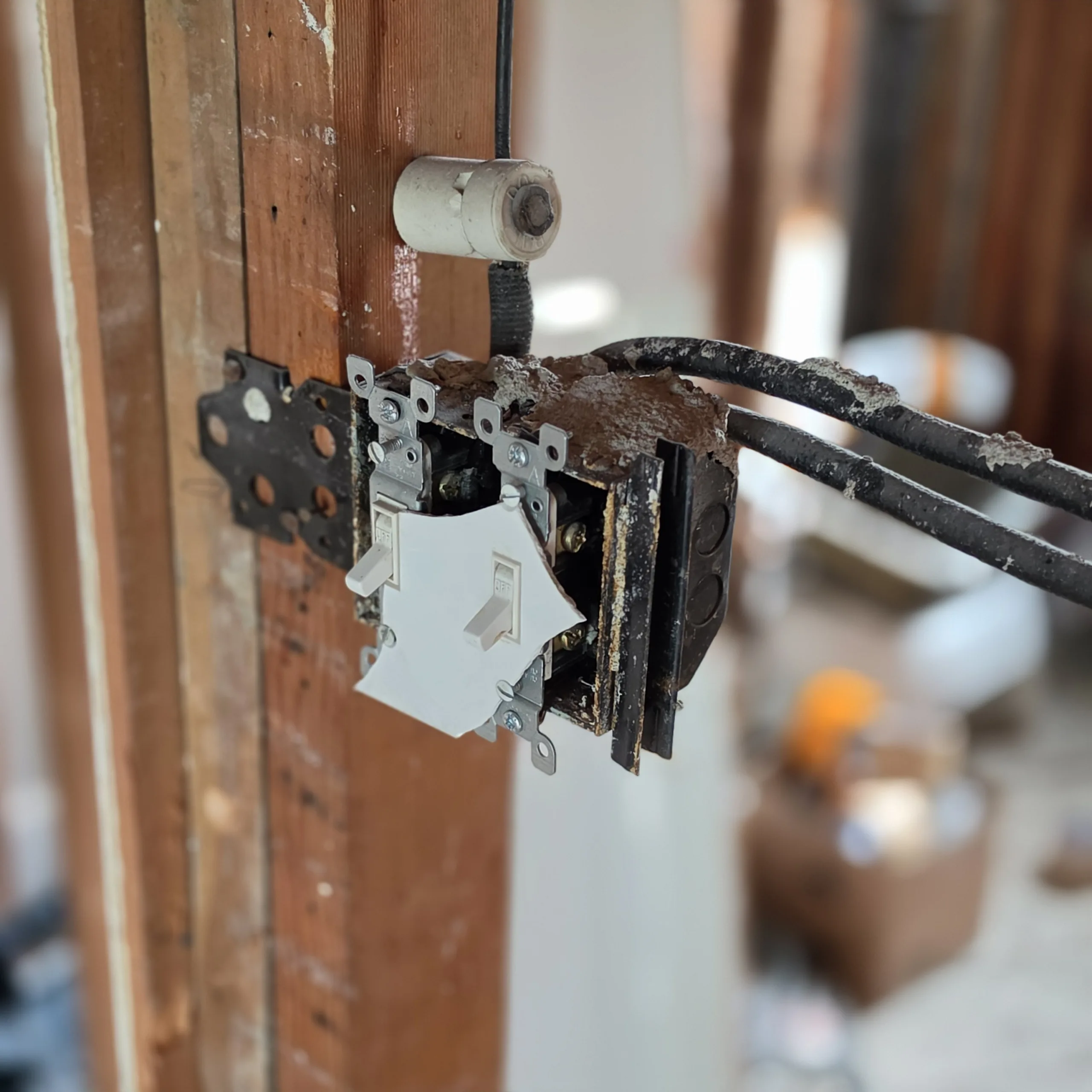
After the new wiring is in place, our electricians disconnect the old knob-and-tube wiring from active service and install modern wiring, outlets, switches, junction boxes, and properly grounded circuits where required. The condition of the existing electrical system may also call for panel corrections, new breakers, updated circuits, or service upgrade planning.
Will Rewiring Damage My Walls or Plaster?
Older Seattle homes with plaster walls, finished ceilings, tight framing, or hidden wire paths sometimes require small access holes. Before work starts, we explain expected access points and keep openings as limited and intentional as possible.
Our crew cleans up electrical work areas as the project moves forward and coordinates inspections when permits are required. If plaster, drywall, paint, or finish repair is needed after access holes are made, Benchmark will explain what to expect before the work begins. Benchmark Home Services handles the electrical replacement work; finish patching and painting may require a qualified drywall, plaster, or painting contractor depending on the home and scope.
Our priority is simple: remove unsafe or outdated knob-and-tube wiring, install a safer modern electrical system, and treat your older home with the care it deserves.
Why Seattle Homeowners Choose Benchmark Home Services
Older Home Experience
Many Seattle homes have mixed-era wiring, two-prong outlets, old panels, remodel wiring, and hidden legacy wiring. We understand how to plan around those conditions.
Code-Focused Work
Knob-and-tube replacement should be safe, organized, and ready for inspection when permits are required. We do not cut corners on electrical safety.
Clear Recommendations
We explain what we found, what we recommend, and what affects the project cost so you can make a confident decision.
Full Electrical Capability
Older wiring work often connects to panels, service upgrades, grounding, circuits, EV chargers, lighting, and troubleshooting. One company can help coordinate the bigger picture.
Seattle Neighborhoods We Serve
Benchmark provides knob-and-tube replacement and older-home electrical upgrades throughout Seattle, including neighborhoods where older homes commonly need rewiring, panel upgrades, grounding corrections, and electrical modernization.
Neighborhoods Across Seattle
Our service area includes Ballard, Queen Anne, Magnolia, Beacon Hill, Capitol Hill, Green Lake, Northgate, West Seattle, Georgetown, Phinney Ridge, Fremont, South Seattle, and surrounding areas.
Electrical Work That Fits Older Seattle Homes
Whether your home needs targeted knob-and-tube replacement, whole-home rewiring, a panel upgrade, or a larger modernization plan, we tailor the work to the property.
Knob and Tube Replacement Seattle FAQ
What is the average cost to replace knob and tube wiring?
In Seattle, knob-and-tube replacement commonly ranges from about $4,500 for targeted work to $35,000+ for larger whole-home replacement. Complex projects with plaster access, panel replacement, service upgrades, or broader modernization can reach $45,000+.
How do I know if knob-and-tube wiring is active or abandoned?
Visible ceramic knobs, tubes, or old cloth-covered conductors do not prove whether wiring is energized. Benchmark reviews visible wiring, outlet behavior, panel conditions, accessible attic or basement areas, junction points, and known problem locations to help separate active legacy wiring from abandoned material.
Is it worth replacing knob and tube wiring?
For many older Seattle homes, yes. Replacement can improve safety, support grounded outlets, reduce insurance and resale concerns, and make the electrical system more practical for modern use.
Can I sell a house with knob and tube wiring?
You may be able to sell a home with knob-and-tube wiring, but it can create inspection, buyer, lender, or insurance concerns. Replacing active old wiring can make the sale process easier and reduce objections.
How much does it cost to replace knob and tube in a 2,100 sq ft home?
A 2,100 sq ft Seattle home could fall anywhere from the higher partial-replacement range to a whole-home rewiring range, depending on how much active wiring remains, access, panel condition, and wall repair needs.
Does knob and tube replacement require a permit in Seattle?
Major knob-and-tube replacement and rewiring work typically requires an electrical permit through the Seattle Department of Construction & Inspections. Inspection requirements depend on the scope and may include cover, service, feeder, or final inspections.
Does knob-and-tube replacement require AFCI or GFCI protection?
New or replacement branch-circuit work may require AFCI protection, GFCI protection, or both depending on the circuit, location, scope, and current electrical code requirements. Benchmark reviews the wiring plan, outlet locations, grounding, panel condition, and inspection requirements before recommending the right protection method.
Is old cloth-covered wiring always knob-and-tube?
No. Some older homes also have early nonmetallic cable, sometimes called old cloth NM cable or snake-skin wiring. It is different from knob-and-tube, but it may still need evaluation for condition, grounding, panel connections, and whether replacement is appropriate.
Will insurance cover a home with knob and tube wiring?
Some insurance carriers may decline coverage, increase premiums, limit coverage, request documentation, or require proof that active knob-and-tube wiring has been replaced or decommissioned. Benchmark does not guarantee underwriting decisions, but replacement and documentation can help address common insurance concerns.
Can knob and tube wiring be partially replaced?
Sometimes, yes. When active knob-and-tube wiring is limited to specific areas, targeted replacement may be possible. If the wiring is widespread, broader rewiring may be the better long-term solution.
Will knob-and-tube replacement damage my walls or plaster?
Some access holes may be needed, especially in older homes with plaster walls, finished ceilings, tight framing, or limited attic and crawlspace access. We plan wire routes carefully, explain expected access points before work begins, and keep openings as limited as possible. Drywall, plaster, paint, or finish repair may require a separate patching or painting contractor.
Can I add insulation over knob-and-tube wiring in Washington?
Do not cover suspected active knob-and-tube wiring without proper electrical review. Washington rules for existing K&T and insulation are specific, and foam insulation may not be used with knob-and-tube wiring.
How long does knob and tube replacement take?
Most projects take several days to two weeks, depending on the home size, access, amount of active wiring, permit needs, and whether the scope includes panel or service upgrades.
Related Electrical Services in Seattle
For homeowners comparing K&T, rewiring, panel capacity, outlets, and service upgrade planning, use the older Seattle home electrical upgrade guide.
If knob-and-tube replacement is only one part of the project, these pages can help you compare the right next step:
Need Knob and Tube Replacement in Seattle?
If your home still has active knob-and-tube wiring, or you need clear guidance after an inspection, remodel, insurance review, or home sale concern, Benchmark Home Services can help. For broader planning, use our older Seattle home electrical upgrade guide or request a K&T estimate below.
Washington Contractors License # BENCHHS818NT | BENCHHS812NZ
Benchmark Home Services, Inc. · 1003 S. 197th St, Des Moines, WA 98148 · (206) 717-5076