
Home Electrical Safety Guide
The Hidden Dangers of Loose Wiring in Your Home
Loose electrical connections can hide inside panels, outlets, switches, junction boxes, and fixtures. They may start as a small annoyance, but over time they can cause heat, arcing, flickering lights, damaged devices, tripped breakers, and serious safety risks.
Why loose wiring is easy to miss
Most electrical connections are hidden behind covers, inside boxes, or inside the electrical panel. A homeowner may not see the problem until symptoms show up: flickering lights, a warm outlet, buzzing, burning smells, nuisance breaker trips, or an appliance that suddenly acts unreliable.
Loose wiring can happen from age, vibration, heat cycling, poor installation, damaged devices, overloaded circuits, corrosion, or repeated use. Once a connection is loose, it can create more resistance. More resistance can create heat. Heat can damage the connection further.
Important: If you notice heat, burning smells, buzzing, arcing, smoke, or discoloration around an outlet, switch, light, or panel, stop using that area and call a qualified electrician.
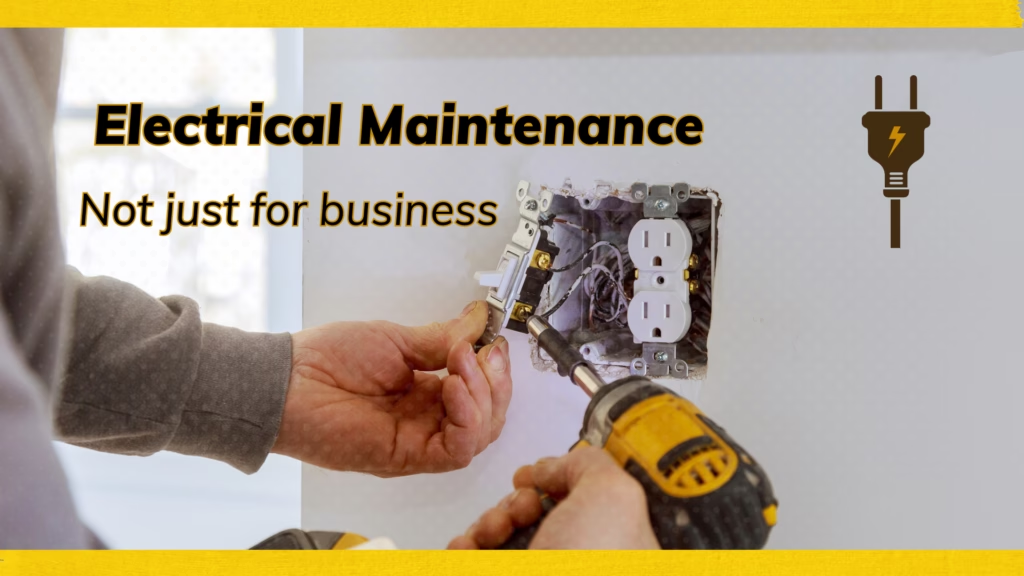
What loose wiring can cause
A loose connection does not always fail immediately. That is what makes it dangerous. It can work intermittently while slowly creating heat and damage.
Heat at the connection
A poor connection can create resistance. Resistance creates heat, and that heat can damage insulation, devices, terminals, and nearby materials.
Arcing
When electricity jumps across a small gap, it can create an arc. Arcing can damage equipment, create noise, produce heat, and increase fire risk.
Voltage problems
Loose or damaged connections can cause voltage drops or inconsistent power, which may make lights flicker or equipment behave unpredictably.
Damaged outlets and switches
Devices can loosen with age and use. A loose receptacle may not grip plugs properly, and a worn switch may buzz, heat up, or fail.
Breaker and panel issues
Loose connections inside a panel can be especially serious. Panel troubleshooting should be handled by an electrician, not opened or tightened by a homeowner.
Repeated service problems
Loose wiring can create intermittent issues that come and go, making the problem harder to diagnose until it gets worse.
Warning signs homeowners should watch for
These symptoms do not always mean loose wiring is the cause, but they are worth taking seriously.
Flickering or dimming lights
Frequent flickering may point to loose connections, overloaded circuits, damaged wiring, or panel issues.
Warm outlets or switch plates
Heat around outlets, switches, or cover plates should be checked. Heat can indicate overload, loose connections, or a failing device.
Buzzing, crackling, or popping sounds
Electrical devices should not make these sounds. Noise can be a sign of arcing or a failing connection.
Burning smell or discoloration
Brown marks, melted areas, smoke odor, or a hot electrical smell are urgent warning signs.
Breakers that trip repeatedly
A breaker that keeps tripping may be responding to overload, fault, equipment failure, or wiring problems.
Loose plugs or unreliable outlets
If plugs fall out, feel loose, or only work at certain angles, the receptacle may be worn or damaged.
A real-world example: one loose connection can create a big problem
Imagine a high-demand circuit serving an appliance or dedicated load. When the connection is tight and properly installed, power moves through the circuit with minimal resistance. If that connection loosens, the circuit can start producing heat at the weak point.
The homeowner may only notice small symptoms at first: occasional flicker, a breaker that trips once in a while, or equipment that seems less reliable. But inside the box or panel, the connection may be getting hotter each time the load runs.
Why inspections help: An electrician can look for visible damage, test affected circuits, check connections, identify worn devices, and use troubleshooting methods to locate the problem before it becomes more expensive or unsafe.
What an electrician may check
- Outlet and switch condition
- Signs of heat or discoloration
- Breaker and panel condition
- Loose or damaged terminations
- Voltage issues under load
- Overloaded or poorly planned circuits
- Older wiring or previous repair work
Why electrical maintenance is worth doing
Electrical maintenance is not about replacing everything for no reason. It is about catching weak points before they damage equipment, interrupt power, or create safety hazards.
Prevent bigger repairs
A damaged outlet or loose connection is usually easier to correct before it overheats, damages wiring, or spreads to nearby components.
Improve reliability
Tight, properly installed connections help reduce flickering, nuisance trips, unreliable outlets, and intermittent power problems.
Protect future upgrades
If you plan to add EV charging, panel upgrades, dedicated circuits, lighting, or new appliances, the existing wiring should be evaluated first.
Do not DIY panel tightening or hidden wiring repairs
It may sound simple to “tighten a loose wire,” but electrical troubleshooting can be dangerous. Panels and circuits can contain live parts, hidden faults, damaged insulation, overheating, or wiring errors from previous work.
- Do not remove your electrical panel cover unless you are qualified to do so.
- Do not keep resetting a breaker that trips repeatedly.
- Do not ignore a warm outlet, burning smell, or buzzing switch.
- Do not use damaged outlets or loose receptacles as a temporary fix.
- Do not rely on extension cords as permanent wiring.
Homeowners can safely observe symptoms and stop using affected equipment. Testing, diagnosis, panel work, and wiring repairs should be handled by a qualified electrician.
Related electrical services
Loose wiring problems often connect to troubleshooting, panel work, rewiring, outlets, dedicated circuits, and older-home electrical repairs.
- Electrical troubleshooting in Seattle
- Electrical panel replacement in Seattle
- House rewiring in Seattle
- Knob-and-tube wiring replacement in Seattle
- Electrical outlet installation in Burien
- Request a free electrical estimate
For a deeper technical version of this topic, see the loose wiring white paper: Download the PDF.
Loose wiring FAQs
What causes loose wiring?
Loose wiring can be caused by age, vibration, heat cycling, poor installation, worn devices, corrosion, overloaded circuits, or previous repair work.
Is a warm outlet dangerous?
A warm outlet can be a warning sign. Stop using it and have it checked, especially if there is discoloration, buzzing, a burning smell, or loose plug fit.
Why do my lights flicker?
Flickering lights can be caused by loose connections, overloaded circuits, faulty devices, panel issues, or normal load changes. Frequent flickering should be evaluated.
Can loose wiring cause a breaker to trip?
Yes. Breaker trips can be related to overloads, faults, damaged equipment, loose connections, or wiring problems. A breaker that trips repeatedly should not be ignored.
Can I tighten loose wiring myself?
Electrical repairs can expose you to shock, arc flash, damaged wiring, and live equipment. Panel work and wiring repairs should be performed by a qualified electrician.
When should I schedule electrical troubleshooting?
Schedule troubleshooting when you notice flickering lights, warm outlets, buzzing, burning smells, repeated breaker trips, unreliable outlets, or visible damage.
Concerned about loose wiring or unreliable power?
Benchmark Home Services helps homeowners across Seattle, Des Moines, Burien, Normandy Park, Federal Way, Kent, SeaTac, Renton, and nearby South King County communities with electrical troubleshooting, panel work, outlets, rewiring, dedicated circuits, and safety-focused repairs.